*********
Nearly 50 years after the First Fleet arrived in Port Jackson, in 1835 NSW Governor Richard Bourke implemented the legal principle of terra nullius in Australian law as the basis for British settlement. Meaning “land belonging to no one”, it was interpreted as "a complete absence of people and additionally the absence of 'civilised' people capable of land ownership" and as such, was used to justify and legitimise the dispossession, dispersal, and inhumane treatment of First Nations peoples until it was overturned in 1992 by the High Court's Mabo Decision that recognised Aboriginal and Torres Strait Islander peoples’ continuing connection and rights to land through Native Title.
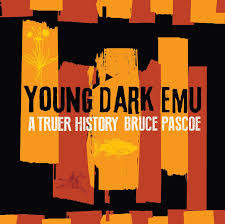
Since then, there has been a significant shift in the understanding of the history and custody of this continent for the thousands of years before European settlement and in this new edition of Pascoe's seminal book, he uses a variety of research, accounts of early European explorers, colonists and farmers and other primary sources to show young readers what Australia was like before colonisation and to dispel the nomadic hunter-gatherer label that has been perpetuated for generations. He demonstrates that it was a land of cultivated farming areas, productive fisheries, permanent homes, and an understanding of the environment and its natural resources that supported thriving villages across the continent, painting an entirely different picture to popular belief.
Since the edition for young readers was first published in 2019, not only has it sold nearly 100 000 copies, but it has gathered a swag of awards including being the winner of both the 2020 Australian Booksellers Association Kids’ Reading Guide Children’s Book of The Year and the 2020 Children’s Book Council of Australia Book of The Year Awards, Eve Pownall Award for Information Books,
As well as the extensive teachers' notes available from the publisher, aimed primarily at those in Year 4 and 5, there is also a swathe of resources and reviews online that a search will reveal, but teachers should be aware that the book itself contains content that is considered inappropriate today and that some of the themes and concepts explored may be challenging for some students. Suggestions for dealing with these are provided in the teachers' notes, particularly through unpacking the what and the why that Pascoe has included them.
These days, many schools include an Acknowledgement of Country in their daily routines, and a Welcome to Country is common practice at major events. Young Dark Emu - A Truer History helps students understand the history that underpins them. If, as a nation, we are to move forward to true reconciliation, it is essential that tomorrow's adults know on whose shoulders they stand, and this new edition is designed to appeal to a new generation of young independent readers.
This review can also be found here.
Recommended by: Barbara Braxton, Teacher Librarian, New South Wales AUSTRALIA
See more of her recommendations:
500 Hats http://500hats.edublogs.org/
The Bottom Shelf http://thebottomshelf.edublogs.org/