Two teen boys grapple with identity and accountability and set off a ripple effect within their community after a school assembly is disrupted by a shouted slur.
Freshmen Dayton and Farshid couldn’t be more different―or so it seems.
When Dayton takes a dare and shouts the f-slur at a visiting author during a school event, it sets off a chain reaction that forces both boys to face parts of themselves they’d rather ignore.
Dayton, grappling with the fallout of his actions, faces rejection from his friends, disappointment from his parents, and a growing awareness of the harm he’s caused. Meanwhile, Farshid is left to untangle his own feelings―about himself and about the quiet struggle of coming to terms with his queerness in a world steeped in heteronormativity.
As their lives unexpectedly intersect, Dayton and Farshid must reckon with what kind of men they want to become and whether they have the courage to defy toxic masculinity and societal expectations.
Timely, raw, and deeply thought-provoking, this novel is perfect for fans of Jason Reynolds and Nic Stone.---from the publisher
224 pages 978-1250405555 Ages 13 and up
Keywords: high school, prejudice, LGBTQ, cause and effect, consequences, queerness, values, beliefs, boys's issues, toxic masculinity, diverse books, power of words, 13 year old, 14 year old, 15 year old, 16 year old, author, respecting others, community, accountability, identity, influence
*******
“Now that ain't workin', that's the way you do it
Lemme tell ya, them guys ain't dumb
Maybe get a blister on your little finger
Maybe get a blister on your thumb”
– Mark Knopfler/Sting (1985)
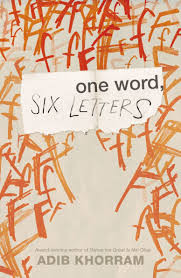
Dayton Reilly is the ninth-grader who takes a $20 bet offered by a classmate. So it is that, in the middle of a school assembly featuring a poet who is an alumni, Dayton hollers that one word composed of six letters that one hears in Dire Straits’ big number-one hit “Money for Nothing.” (The word is repeatedly alluded to but actually never articulated in the book. The cover features a plethora of the word’s first letter.)
Dayton’s punishment is a three-day in-school suspension. He will share most of this time with another freshman wrongdoer named Brody Connors, who asks him that first morning:
“‘What’d you do to land in here anyway?’
‘Disrupted the assembly last Friday,’ you say.
Brody’s eyes go wide. ‘That was you?’
You nod. Brody must’ve heard. Or seen the email that went out. But the email didn’t have the whole story, so you tell him yourself.
‘And you didn’t even get your twenty dollars?’ he asks when you finish. ‘That’s cold.’
You shrug. ‘I haven’t even seen Reggie since then.’
Brody rolls his eyes. ‘No surprise. Reggie thinks he’s better than everyone.’
‘Maybe.’ He’s not exactly your friend. You only met him this year when you got seated next to each other in ELA. But maybe Brody’s right.
You crack a tiny grin.
‘Seriously, though, that’s kind of epic,’ Brody says. ‘You’re gonna be a legend.’
You don’t want to be a legend. You just want to survive freshman year. Pass your classes. That kind of stuff. Maybe get a girlfriend? You’re not 100 percent sure on that just yet.
But you definitely don’t want to be the guy everyone thinks goes around shouting slurs at strangers, like some sort of…walking hate crime or something.
It was just a word. A word you shouted because you weren’t thinking.”
Farshid Khorram is a sensitive, ninth-grade classmate who has been wondering/worrying about his sexual orientation. Dayton’s “just a word” holler sets off something in Farshid. Fear filled, he becomes obsessed with building himself up physically. He learns to box, and develops a serious eating disorder, while uncharacteristically and repeatedly becomes verbally abusive toward his poor, loving mama.
“Your eyes are burning, starting to blur. You tell yourself it’s the sun, not the dread scooping out your chest like your dad scoops out the sweet and sour pulp of a passionfruit.
You tell yourself that, but it doesn’t work.
You can lie to everyone else, but you can’t keep lying to yourself. It doesn’t work anymore. The truth is inside, growing and growing, no matter how you try to ignore it, stuff it down, put it in the corner tucked away where no one will ever find it.
Everyone already thinks you’re different for being Iranian. For being an immigrant. For being Bahá’í. What would they say if they knew you were…
You still can’t say the word, not even in the safety of your own mind. All you can do is feel out the space around it, the jagged edges poised to rip your world apart if you aren’t careful.”
ONE WORD, SIX LETTERS is a disturbing tale about what name-calling can lead to. In alternating chapters, and told in the second person, this powerful story follows classmates Dayton and Farshid from that infamous assembly outburst onward.
Given the frequency with which the book’s male characters mention or discuss masturbation and repeatedly engage in gestures depicting the actions of male masturbation, I would hesitate adding this one to elementary collections. I’d still recommend James Howe’s THE MISFITS for the younger folks. But the middle school crowd will enthusiastically savor and talk up this provocative coming-of-age story.
Take it from one who still retains bitter memories of being called that six-letter word (and worse) in junior high in the late Sixties. Being called names has a lasting negative impact. Too many vulnerable kids have harmed themselves over this sort of behavior. This makes ONE WORD, SIX LETTERS a must-have for those middle school collections.
Richie Partington, MLIS, California USA
See more of Richie's Picks <http://richiespicks.com/> http://richiespicks.pbworks.co