
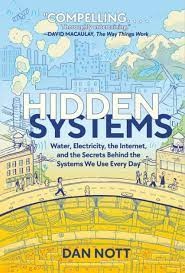
We use water, electricity, and the internet every day--but how do they actually work? And what’s the plan to keep them running for years to come? This nonfiction science graphic novel takes readers on a journey from how the most essential systems were developed to how they are implemented in our world today and how they will be used in the future.
What was the first message sent over the internet? How much water does a single person use every day? How was the electric light invented?
For every utility we use each day, there’s a hidden history--a story of intrigue, drama, humor, and inequity. This graphic novel provides a guided tour through the science of the past--and reveals how the decisions people made while inventing and constructing early technology still affect the way people use it today.
Full of art, maps, and diagrams, Hidden Systems is a thoughtful, humorous exploration of the history of science and what needs to be done now to change the future.---from the publisher
272 pages 9780593125366 Ages 9-13
Keywords: nonfiction, STEM, science, graphic nonfiction, engineering, history, technology, how things work, 9 year old, 10 year old, 11 year old, 12 year old, 13 year old
*************
“And on up the river is Grand Coulee Dam
The mightiest thing ever built by a man
To run the great factories and water the land
So roll on, Columbia, roll on”
– Woody Guthrie (1941)
“A hidden system is something we don’t notice until it breaks. But when these systems are doing what they’re supposed to, they become so commonplace that we hardly see them. Hidden systems are in the news all the time. Usually when something dramatic happens. But by overlooking hidden systems the rest of the time, we take for granted the benefits they provide for some of us, and disregard the harm they cause others. These systems structure our society, and even when they’re working, are a source of inequality and environmental harm.
I began drawing about hidden systems because comics seem to have this superpower-like ability to compare how we think about something with how it works concretely. To view small pieces in the context of larger systems. And to show embedded histories, inequities, and imagined potentials all contained within the things we notice least.”
HIDDEN SYSTEMS totally rocks. For teens who prefer reading about real stuff, this is a well-researched, well-balanced, provocative, and thoroughly entertaining piece of nonfiction. It merits lots of attention, accessibility, (and awards). Given the graphic novel cartooning format, this one will appeal to a particularly broad audience.
In HIDDEN SYSTEMS, educator Dan Nott has created an illuminating tale about essential services. I am sort of embarrassed to admit how little I previously knew about how these hidden systems actually work. I was particularly shocked to learn how the always-at-the-ready electricity, municipal water, and sanitation services I took for granted as a suburban kid in the Sixties, were still absent from many U.S. homes at that point.
The author works his way from the most recent system to the oldest. He first examines the history of the Internet and how it connects directly and physically to 1844 and the communication revolution that began with Samuel Morse. Next, the author explains the concepts surrounding electrical power, beginning with the transfer of energy. (Plants absorb sun energy; animals and people eat plants; and people eat animals.) He provides a history of fossil fuel use. He then leads readers through a history of electricity generation, going back to the 1870s and Thomas Edison, and then forward to the climate crisis.
Finally, he takes us back to the beginnings of modern man and what has been done over thousands of years to provide fresh, clean water to the masses.
What I am especially pleased with are the author’s caveats concerning the downsides and disparities in the spread of these technologies. Given the world’s climate crisis, we must avoid continuing forward by merely keeping up the same-old same-old. HIDDEN SYSTEMS implicitly demands that young audiences–who may well be around for the next fifty, sixty, or seventy years–seriously contemplate their personal consumption, and consider paying attention and becoming better versed in order to participate in discussions about how humankind might mitigate the planet-threatening issues tied to these technologies.
“Dam building spread worldwide, as colonial powers and nations built dams to turn the Earth’s largest rivers into reservoirs. Often financed with debt by the World Bank, large dams were touted as symbols of modernity, which valued engineering know-how over local environmental wisdom and were commonly constructed without the consent of a region’s communities.
By the year 2012, there were at least 58,00 large dams on Earth and millions of smaller dams, leaving two-thirds of major rivers no longer free-flowing.”
That Earth’s human population has nearly quadrupled over my sixty-eight years has led to significant perils for the planet. HIDDEN SYSTEMS does a stellar job of explaining how we got to where we are today, how we are all interconnected, and how there are serious challenges to be faced by our children and grandchildren in maintaining a civilized, human-habitable planet.
Recommended by: Richie Partington, MLIS, California USA
See more of Richie's picks: Richie's Picks <http://richiespicks.com/