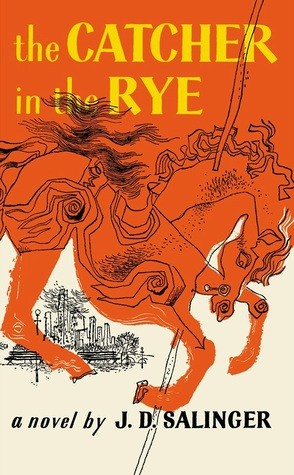
Writing from an institution, sixteen-year-old Holden Caulfield, describes the events that have led to his exhaustion and emotional breakdown.
Caulfield has just been expelled from his Pennsylvania prep school, the Pencey Preparatory Academy. Instead of going home in retreat, he heads in to New York City and checks himself into the Edmont Hotel.
He spends the next three days becoming more and more depressed and in search of connection as he encounters a series of people who leave him with unanswered questions and a sense of being disconnected. These involve spending an evening in a bar with three older women, struggling with an episode with a prostitute, being robbed, calling up an old girlfriend, Sally, talking with a much-admired English teacher and eventually connecting with his younger sister, Phoebe with whom he can share his real feelings.
The reference to the "catcher in the rye" is from Robert Burns' poem which Holden Caulfield interprets as directing him to help children as they head in the direction of falling of a cliff, or losing their innocence. He sees himself as the lone guard who can save them.
A classic story of teenage angst and the search for belonging, meaning and connection and perhaps, self-acceptance.
240 pages 978-0316769488 Ages 15 and up
Recommended by: Barb Langridge, abookandahug.com
Read alike: Louder Than Hunger
********
Anyone who has read J.D. Salinger's New Yorker stories--particularly A Perfect Day for Bananafish, Uncle Wiggily in Connecticut, The Laughing Man, and For Esme With Love and Squalor--will not be surprised by the fact that his first novel is full of children. The hero-narrator of The Catcher in the Rye is an ancient child of sixteen, a native New Yorker named Holden Caulfield.
Through circumstances that tend to preclude adult, secondhand description, he leaves his prep school in Pennsylvania and goes underground in New York City for three days. The boy himself is at once too simple and too complex for us to make any final comment about him or his story. Perhaps the safest thing we can say about Holden is that he was born in the world not just strongly attracted to beauty but, almost, hopelessly impaled on it.
There are many voices in this novel: children's voices, adult voices, underground voices-but Holden's voice is the most eloquent of all. Transcending his own vernacular, yet remaining marvelously faithful to it, he issues a perfectly articulated cry of mixed pain and pleasure. However, like most lovers and clowns and poets of the higher orders, he keeps most of the pain to, and for, himself. The pleasure he gives away, or sets aside, with all his heart. It is there for the reader who can handle it to keep.---from the publisher