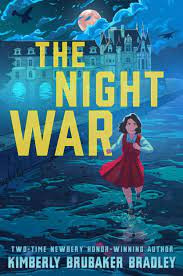
From the two-time Newbery Honor-winning author of The War That Saved My Life and Fighting Words comes a middle grade novel set at the border between freedom and fear in World War II France, at the Chateau de Chenonceau, where a Jewish girl who has lost everything but her life must decide whether to risk even that to bring others to freedom.
“We don’t choose how we feel, but we choose how we act.”
It’s 1942. German Nazis occupy much of France. And twelve-year-old Miriam, who is Jewish, is not safe. With help and quick thinking, Miri is saved from the roundup that takes her entire Jewish neighborhood. She escapes Paris, landing in a small French village, where the spires of the famous Chateau de Chenonceau rise high into the sky, its bridge across the River Cher like a promise, a fairy tale.
But Miri’s life is no fairy tale. Her parents are gone—maybe alive, maybe not. Taken in at the boarding school near the chateau, pretending to be Catholic to escape Nazi capture, Miri is called upon one night to undertake a deadly task, one that spans the castle grounds, its bridge, and the very border to freedom. Here is her chance to escape—hopefully to find her parents. But will she take it? One thing is certain: The person Miri meets that night will save her life. And the person Miri becomes that night could save the lives of many more.
In her return to the era of The War that Saved My Life and The War I Finally Won, Kimberly Brubaker Bradley brings a new and different story, one with a mystical twist, that explores a little-known slice of World War II history, a highly unusual friendship, and the power of choosing courage even when—especially when—there are no good choices to be had.---from the publisher
288 pages 978-0735228566 Ages 9-12
Keywords: historical fiction, European history, Nazis, Jewish, courage, main character female, World War II, 9 year old, 10 year old, 11 year old, 12 year old, prejudice and racism, risk, boarding school
*********
“Yes, and how many times must a man look up
Before he can see the sky?
Yes, and how many ears must one man have
Before he can hear people cry?
Yes, and how many deaths will it take till he knows
That too many people have died?”
– Bob Dylan (1962)
“‘That is not the choice I’m giving you,’ Madame Rosenbaum said, in a fierce whisper. ‘You will run. Your mother and father will save themselves if they can. You must honor them by doing the same. This is bad, Miri. This is different from before. You’re young enough, you speak French without an accent–if you can get away from the buses you might be able to escape.’ Her lips trembled. ‘The choice is whether you will take Nora–I think she will be safer with you than with me.’ She put her cheek against the top of Nora’s head. She was still looking at me. ‘I know what I’m asking. Will you?’
Not can you. Will you.
‘I know you can do it,’ she said. ‘You are stronger than you think. I have faith in you.’”
The Pletzl is the Jewish quarter in one of Paris’s administrative districts during WWII. It is packed full of Jewish immigrants in 1942. This is where twelve-year-old Miri (Miriam) Schreiber is now living with her parents after escaping Nazi Germany in the wake of Kristallnacht. But then the entire Pietzl is raided and emptied of its Jewish occupants, under orders of the Nazis. Miri, who will come to utilize the non-Jewish name Maria, is a brave young woman who successfully escapes the chaos with her neighbor’s two-year-old daughter Nora over her shoulder.
Will her parents, and Nora’s parents survive whatever is the fate of the Jews rounded up? We and Miri have no idea.
Aided by a stranger, Miri and Nora are eventually spirited out of Paris to an unknown destination. Miri ends up hours away from Paris, unwillingly separated from Nora. She’s provided refuge by a diverse and very interesting bunch of nuns at a Catholic school.
Down the road is the Château de Chenonceau–a stunning and real castle in France that I’d now, someday, like to visit. In the sixteenth century, the Château had been the primary residence of Catherine de’ Medici, widow of King Henry II. It is there that our young heroine comes to repeatedly risk her life when she becomes a part-time passeuse, a female smuggler of Jews and others who literally have life-and-death reasons for escaping the Nazi-occupied half of France. A lover of plants, she will also become a gardener at the castle.
While living at the school, she becomes friends with two other girls her age, Jacqueline and Beatrice. Beatrice is in love with history and enjoys telling stories distilled from her reading.
“‘So. There were these Huguenots, and some of them were very rich and powerful. Dukes and things. One of Catherine’s sons was king of France, but he was young and not very powerful, so–the Huguenots were a threat to him, weren’t they? If they could, they’d take his throne. And of course Catherine didn’t want that. His power was her own.
So Catherine married off her most beautiful daughter, Marguerite, to the most important Huguenot noble. The wedding took place in Paris. Then’--Beatrice leaned forward–’a few days later, Catherine had all the groom’s relatives killed, and as many of the other Huguenots as she could find. Thousands of people! That was the Saint Bartholomew’s Day Massacre.’ She looked at me. ‘What’s wrong, Marie? You look sick.’
I felt sick. Her story was awful. The more history you learned, the more you saw the same things happening, over and over, wars and hatred and fighting, people moving from one place to another in search of a safe place to live. Over and over forever. None of it made any sense. ‘Why would Catherine do that to her own daughter?’ I asked.
Beatrice shrugged, indifferent. ‘Money. Power. The usual things.’
I said, ‘She sounds like Hitler, with the Jews.’
Beatrice’s eyes went round. She stared at me in dawning horror and dropped her slice of bread.”
Filled with twists and turns galore, THE NIGHT WAR is a stunning piece of middle grade historical fiction and one of the most fascinating, quirky, and thrilling Holocaust-related books I’ve read.
Recommended by: Richie Partington, MLIS, California USA
See more of Richie's Picks http://richiespicks.com/> http://richiespicks.pbworks.co